Bathroom Ventilation Problems Explained: Why Fans Fail and How to Prevent Mold Growth
A bathroom may be one of the smallest rooms in a home, but it creates some of the biggest moisture challenges. Every hot shower, bath, or running faucet releases water vapor into the air. When that moisture does not escape properly, it can settle on walls, ceilings, mirrors, and hidden areas behind paint or fixtures.
Poor bathroom ventilation is one of the most common reasons homeowners experience mold growth, peeling paint, unpleasant odors, damaged ceilings, and expensive repairs. Many people assume installing an exhaust fan automatically solves the problem, but a poorly selected, incorrectly installed, or neglected ventilation system can fail to remove enough humidity.
Understanding why bathroom fans fail and how to improve airflow can help protect your home, improve indoor air quality, and extend the life of your bathroom finishes.
Why Bathroom Ventilation Matters
Bathrooms naturally produce high levels of humidity. During a hot shower, warm water turns into steam that increases moisture levels inside the room. If this humid air remains trapped, it creates the perfect environment for mold and mildew growth.
Good ventilation helps by:
- Removing excess moisture
- Reducing condensation on surfaces
- Preventing mold formation
- Protecting drywall and paint
- Eliminating unpleasant smells
- Improving indoor air quality
Without proper airflow, moisture can slowly damage materials even if the problem is not immediately visible.
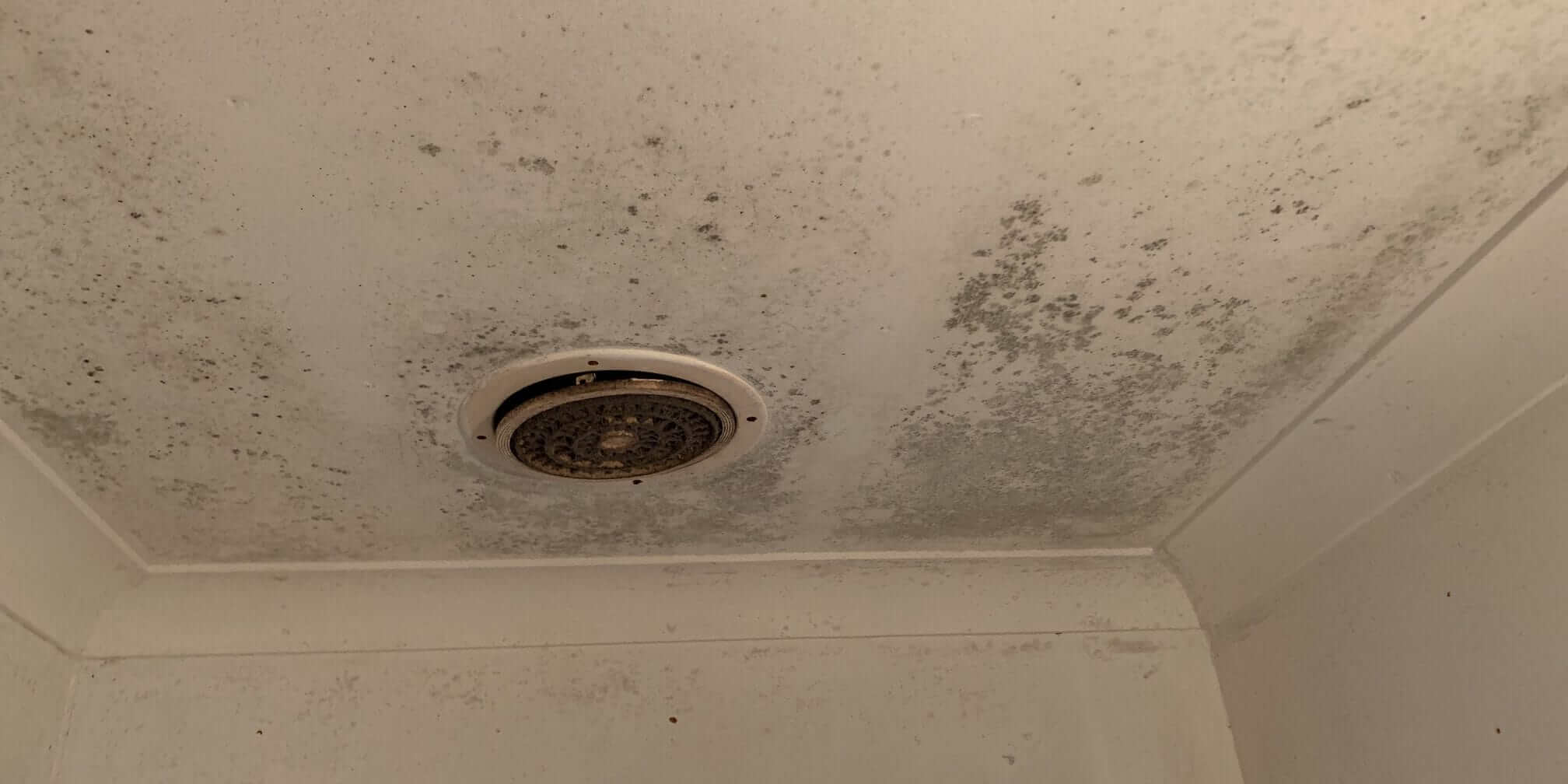
A bathroom ceiling may look normal from the outside while moisture is building behind the surface. Over time, this can lead to discoloration, soft drywall, and structural issues.
Common Signs of Poor Bathroom Ventilation
Many homeowners do not realize they have a ventilation problem until visible damage appears. Some common warning signs include:
Persistent Mirror Fog
A mirror that remains covered with condensation long after a shower indicates that humid air is not leaving the room efficiently.
Peeling Paint or Wallpaper
Excess moisture weakens paint adhesion and can cause bubbling, cracking, or peeling on walls and ceilings.
Dark Spots on Ceiling Corners
Black or greenish spots often indicate mold growth caused by trapped humidity.
Musty Odors
A damp smell usually means moisture is accumulating somewhere, even if mold is not clearly visible.
Slow Drying Towels and Surfaces
If towels, bath mats, and bathroom surfaces stay wet for long periods, ventilation may not be removing enough moisture.
Why Bathroom Exhaust Fans Fail
Many people install an exhaust fan and expect it to work perfectly for years. However, several issues can reduce its effectiveness.
The Fan Is Too Small for the Bathroom
One of the most common mistakes is choosing a fan that does not have enough airflow capacity.
Bathroom fans are measured by cubic feet per minute (CFM), which indicates how much air the fan can move. A small fan in a large bathroom may run continuously but still fail to control humidity.
A properly sized fan should match the room size and moisture level. Larger bathrooms, bathrooms with bathtubs, and frequently used family bathrooms often require stronger ventilation.
Poor Fan Installation
Even a high-quality exhaust fan can perform badly if it is installed incorrectly.
Common installation problems include:
- Loose connections
- Incorrect duct sizing
- Long duct runs with unnecessary bends
- Leaking duct joints
- Exhausting air into the attic instead of outdoors
A bathroom fan should move humid air outside the building, not simply relocate it to another hidden area.
Blocked or Dirty Fan Components
Over time, dust and debris collect on fan covers, blades, and internal components. This reduces airflow and forces the motor to work harder.
A fan that sounds louder than usual or moves very little air may need cleaning or maintenance.
Regular cleaning can improve performance and extend the fan’s lifespan.
The Fan Is Not Used Long Enough
Many homeowners turn off the bathroom fan immediately after leaving the shower. However, humidity often remains high even after the visible steam disappears.
Running the fan for around 20 to 30 minutes after bathing can help remove remaining moisture.
Some modern ventilation systems include humidity sensors or timers that automatically continue operating after use.
Duct Problems Reduce Airflow
The duct connected to the exhaust fan plays an important role in ventilation performance.
Problems can occur when:
- The duct is crushed
- The duct is too narrow
- The path is excessively long
- Outdoor vents are blocked
- Condensation forms inside the duct
A poorly designed duct system can significantly reduce the amount of moisture removed from the bathroom.
How to Prevent Mold Growth in Bathrooms
Proper ventilation is the first step, but preventing mold requires a combination of good habits, maintenance, and smart design choices.
Use a Humidity-Sensing Exhaust Fan
Humidity-controlled fans automatically detect moisture levels and turn on when the air becomes too humid.
This is useful because homeowners do not need to remember to activate the fan every time they shower.
These systems are especially helpful in guest bathrooms, rental properties, and homes where multiple people use the bathroom.
Improve Air Circulation
A bathroom needs a way for fresh air to enter while humid air leaves.
If a bathroom door fits tightly with no airflow gap, the exhaust fan may struggle because it cannot pull enough replacement air into the room.
A small gap under the door or a properly designed ventilation opening can improve airflow.
Choose Mold-Resistant Materials
Ventilation works best when combined with moisture-resistant building materials.
Helpful options include:
- Mold-resistant drywall
- Waterproof shower surfaces
- Quality bathroom paint
- Properly sealed grout
- Moisture-resistant flooring
These materials do not replace ventilation but provide additional protection.
Maintain Exhaust Fans Regularly
Bathroom fans should not be treated as a “set and forget” appliance.
Simple maintenance steps include:
- Cleaning the fan cover every few months
- Checking airflow performance
- Inspecting exterior vents
- Listening for unusual noises
- Replacing old fans when performance declines
A fan that is more than 10 years old may not provide the same efficiency as newer models.
Consider Natural and Mechanical Ventilation Together
Windows can help reduce humidity, but they are not always a reliable solution.
Opening a window may work temporarily, but it depends on weather conditions and outdoor humidity. A properly installed exhaust fan provides more consistent moisture control.
The best bathroom designs often combine mechanical ventilation with smart airflow planning.
When Should You Replace a Bathroom Fan?
Replacing a bathroom fan may be necessary if:
- It makes unusual noises
- It vibrates excessively
- It has weak airflow
- It frequently stops working
- Mold problems continue despite regular use
Modern fans are often quieter, more energy-efficient, and better at controlling humidity than older models.
Final Thoughts
Bathroom ventilation problems are often overlooked because moisture damage develops slowly. A fan that appears to be working may still fail to remove enough humidity if it is undersized, poorly installed, or improperly maintained.
Preventing mold growth requires more than simply turning on an exhaust fan. Proper fan selection, correct installation, regular cleaning, moisture-resistant materials, and good airflow habits all work together to create a healthier bathroom environment.
A well-ventilated bathroom protects your home from costly repairs while improving comfort and indoor air quality. Investing in proper ventilation today can prevent much larger problems in the future.