Kitchen Sink Upgrade Options That Improve Cleaning Convenience and Modern Functionality
The kitchen sink is one of the most frequently used features in any home, yet it is often overlooked during remodeling projects. Homeowners spend significant time washing dishes, preparing food, cleaning ingredients, and managing daily kitchen tasks around the sink area. An outdated or poorly designed sink can make these activities more difficult and reduce the overall efficiency of the kitchen.
Modern kitchen sink upgrades provide homeowners with better functionality, improved durability, and enhanced design options. From deeper basins and smart faucets to advanced materials and workstation-style sinks, today’s sink solutions are designed to support modern lifestyles.
A well-planned kitchen sink improvement can make everyday tasks easier while adding visual appeal and increasing the overall value of the kitchen. Whether upgrading a small kitchen or completing a full renovation, choosing the right sink design can significantly improve how the space performs.
Importance of a Functional Kitchen Sink Design
The kitchen sink is more than just a place for washing dishes. It serves as a central workstation where many daily activities take place. A poorly designed sink can create unnecessary inconvenience, while a well-designed option can improve workflow and organization.
Modern kitchen sink designs focus on combining practicality with style. The right sink should match the kitchen layout, countertop material, household needs, and cleaning habits.
Important factors to consider include:
- Sink size and depth
- Material durability
- Faucet compatibility
- Cleaning requirements
- Available counter space
A thoughtful sink upgrade improves efficiency and creates a more enjoyable cooking environment.
Upgrade to a Deep Basin Sink for Better Cleaning Performance
One of the most popular kitchen sink improvements is replacing a shallow sink with a deeper basin design. Traditional shallow sinks often make it difficult to wash large cookware, baking trays, and oversized kitchen items.
Deep basin sinks provide additional space and make cleaning tasks easier by allowing more room for soaking and washing.
Benefits of deeper sinks include:
- Easier cleaning of large dishes
- Reduced water splashing
- More workspace flexibility
- Improved kitchen organization
A deeper sink can make a noticeable difference in everyday kitchen activities, especially for households that regularly prepare large meals.
Choose an Undermount Sink for a Cleaner Modern Appearance
Undermount sinks have become increasingly popular in modern kitchens because they create a seamless connection between the countertop and sink area.
Unlike traditional drop-in sinks that sit above the countertop, undermount models are installed beneath the surface. This creates a cleaner appearance and makes countertop cleaning easier.
Advantages of undermount sinks include:
- Smooth countertop transition
- Easier removal of crumbs and spills
- Modern visual appeal
- Improved kitchen hygiene
They work especially well with stone, quartz, and solid-surface countertops where a sleek appearance is desired.
Consider Farmhouse Sinks for Style and Functionality
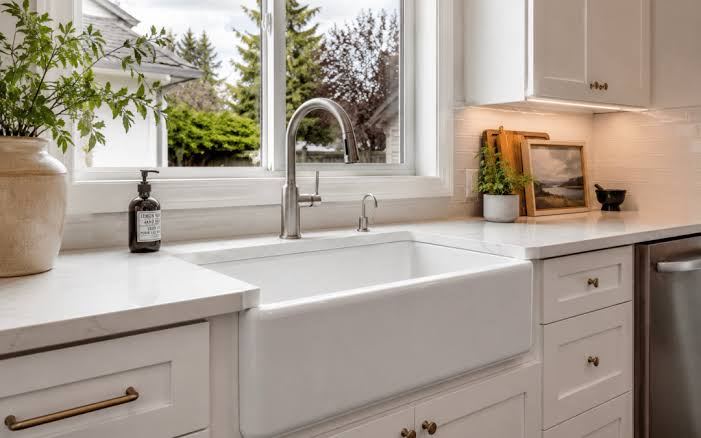
Farmhouse sinks, also known as apron-front sinks, provide a distinctive appearance while offering practical benefits. Their large front-facing design creates a strong visual feature and adds character to traditional and modern kitchens.
These sinks are especially useful for homeowners who want:
- Large washing capacity
- Comfortable access
- A statement design element
- Traditional-inspired aesthetics
Farmhouse sinks are available in materials such as porcelain, fireclay, stainless steel, and composite options, allowing homeowners to match different kitchen styles.
Select Durable Sink Materials for Long-Term Use
The material of a kitchen sink directly affects its durability, appearance, and maintenance requirements. Choosing the right material helps ensure the sink remains attractive and functional for many years.
Popular kitchen sink materials include:
Stainless steel sinks are widely used because they are durable, affordable, easy to clean, and resistant to heat.
Composite granite sinks provide a stylish appearance with strong resistance to scratches, stains, and daily wear.
Fireclay sinks offer a classic look and strong durability but may require more careful installation because of their weight.
The best material depends on budget, design preferences, cleaning habits, and long-term maintenance expectations.
Install Smart Faucets for Improved Convenience
A kitchen sink upgrade is often incomplete without improving the faucet system. Modern smart faucets provide additional convenience by making everyday tasks easier.
Touchless faucets use motion sensors to activate water flow without requiring physical contact. This can improve hygiene by reducing the spread of dirt and bacteria.
Modern faucet features may include:
- Touchless operation
- Pull-down spray heads
- Adjustable water flow
- Temperature controls
- Water-saving settings
These improvements create a more efficient and user-friendly sink area.
Add a Kitchen Sink Workstation Design
Workstation sinks are becoming popular because they transform the sink into a multifunctional preparation area. These sinks are designed with built-in accessories that help homeowners prepare food, wash ingredients, and organize kitchen tasks.
A workstation sink may include:
- Cutting boards
- Drying racks
- Colanders
- Sliding accessories
- Preparation surfaces
This design is especially useful for smaller kitchens because it maximizes available workspace without requiring additional countertop area.
Improve Kitchen Organization With Sink Accessories
Small accessories can significantly improve the functionality of a kitchen sink. Modern sink designs often include accessories that help organize cleaning tools and reduce clutter.
Useful sink accessories include:
- Built-in soap dispensers
- Sink grids
- Drain baskets
- Sponge holders
- Drying racks
These additions improve convenience and help maintain a cleaner kitchen environment.
Choose the Right Sink Size for Your Kitchen Layout
The size of the sink should match the available kitchen space and household requirements. A large sink may provide excellent functionality, but it must fit comfortably within the countertop layout.
Small kitchens may benefit from compact sinks that preserve preparation space, while larger kitchens can accommodate oversized basins or double sinks.
Homeowners should consider:
- Countertop dimensions
- Cabinet size
- Cooking habits
- Number of household members
A properly sized sink creates better balance between functionality and available workspace.
Improve Water Efficiency With Modern Sink Features
Water conservation has become an important consideration for many homeowners. Modern kitchen sink upgrades can help reduce unnecessary water consumption while maintaining strong performance.
Water-efficient faucets and adjustable spray systems allow homeowners to control water usage more effectively.
Energy and water-saving features include:
- Low-flow faucet designs
- Automatic shutoff systems
- Adjustable spray patterns
- Efficient aerators
These improvements help lower water expenses and support a more sustainable household.
Coordinate Sink Design With Overall Kitchen Style
A kitchen sink should complement the overall design of the space. Modern kitchens often use sinks as functional design elements rather than hidden fixtures.
The sink style should coordinate with:
- Countertops
- Cabinets
- Hardware finishes
- Appliances
- Backsplash design
A carefully selected sink can enhance the appearance of the kitchen while improving daily performance.
Maintain Kitchen Sinks for Long-Term Performance
Proper maintenance helps preserve the appearance and functionality of kitchen sinks. Different materials require different care methods, but regular cleaning is important for all sink types.
Homeowners should:
- Clean surfaces regularly
- Avoid harsh chemicals when unnecessary
- Prevent buildup around drains
- Check plumbing connections
Regular care helps prevent stains, odors, and damage while extending the lifespan of the sink.
Final Thoughts
Kitchen sink upgrades provide an effective way to improve cleaning convenience, kitchen organization, and overall functionality. From deep basin designs and workstation sinks to smart faucets and durable materials, modern options allow homeowners to create a more efficient and attractive kitchen.
A well-designed sink area improves daily routines by making food preparation, cleaning, and organization easier. When selected carefully, a kitchen sink upgrade becomes a valuable improvement that enhances both comfort and long-term home appeal.
Frequently Asked Questions (FAQs)
What type of kitchen sink is easiest to maintain?
Stainless steel and composite granite sinks are popular choices because they are durable, easy to clean, and resistant to everyday wear.
Is a deeper kitchen sink better?
Yes, deeper sinks provide more space for washing large cookware and can improve cleaning convenience, especially in busy kitchens.
Are touchless kitchen faucets worth installing?
Touchless faucets can improve hygiene and convenience by allowing water control without touching faucet handles.
What is the advantage of a workstation kitchen sink?
A workstation sink adds built-in accessories such as cutting boards and drying racks, helping maximize workspace and improve kitchen organization.
Should I replace my sink during a kitchen remodel?
Replacing the sink during a kitchen remodel is often a good opportunity because countertop, plumbing, and cabinet adjustments can be completed together for better results.