Ann Fleischer – Life, Background, and Her Connection to Henry Kissinger
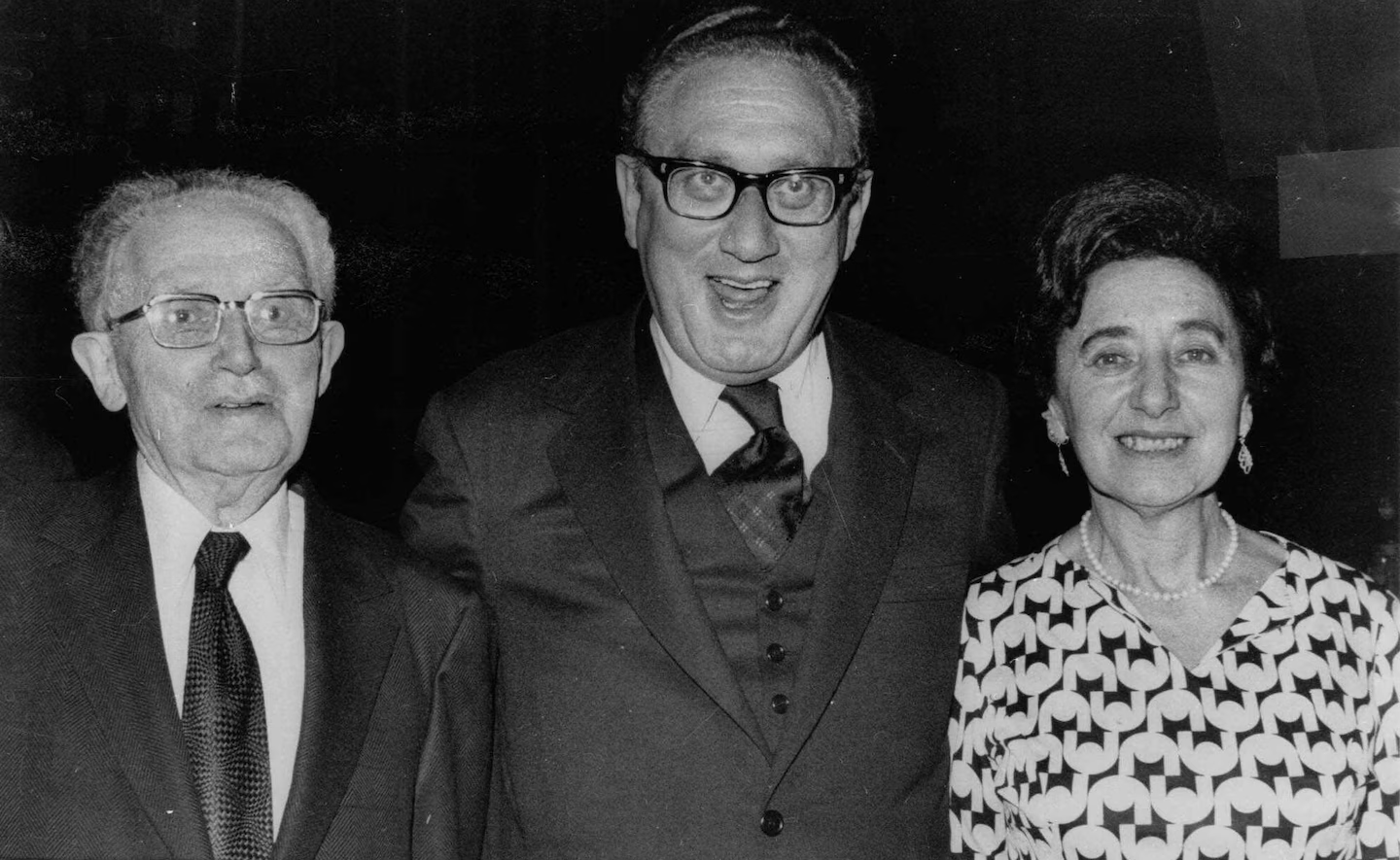
Ann Fleischer is best known as the first wife of Henry Kissinger, the German-American diplomat, political scientist, and Nobel Peace Prize laureate. Her name often appears in biographies of Kissinger, but she herself has largely lived a private life away from public attention. She represents an important early chapter in Kissinger’s personal journey before he rose to global political prominence.
Introduction
When we talk about historical figures, we often focus only on the individuals who stood in the spotlight. But behind many well-known personalities, there are people who played a quiet yet meaningful role in their early lives. Ann Fleischer is one of those names.
She is widely recognized as the first wife of Henry Kissinger. While Kissinger went on to become one of the most influential diplomats of the 20th century, Ann Fleischer chose a more private path. Still, her connection to him places her in an interesting place in history, especially for readers who want to understand the personal side of major public figures.
In this article, we explore her background, marriage, life after separation, and the role she played during the early years of Kissinger’s journey.
Early Life and Background
Ann Fleischer was born into a German-Jewish family, and like many individuals of her generation, her early life was shaped by the political and social changes taking place in Europe during the mid-20th century.
She later moved to the United States, where she built a new life. It was during this period that she crossed paths with Henry Kissinger, who was also a German-Jewish immigrant adapting to life in America.
Although not much detailed public information exists about her childhood or education, what is clear is that she belonged to an educated, culturally aware background. This shared cultural connection likely played a role in bringing her and Kissinger together.
Meeting Henry Kissinger
Ann Fleischer met Henry Kissinger during his early years in the United States, before he became a globally known figure. At that time, Kissinger was still focused on his academic journey.
Their relationship developed during a period when both were young immigrants adjusting to a new country, language, and identity. This shared experience often creates strong emotional bonds, and that seems to have been the case for them as well.
Their relationship eventually led to marriage, marking the beginning of a significant chapter in both of their lives.
Marriage and Early Married Life
Ann Fleischer married Henry Kissinger in the early 1940s, a time when both were still building their futures. Life was not easy for young couples during this period, especially for immigrants trying to establish themselves in America.
Kissinger was pursuing his studies and later military service, while Ann focused on building a stable home environment. Like many couples of that era, they experienced the challenges of financial limitations, career uncertainty, and the pressures of post-war life.
Despite these difficulties, their marriage represents an important phase in Kissinger’s personal development. Ann Fleischer was part of his life before fame and political influence entered the picture.
Family Life and Children
During their marriage, Ann Fleischer and Henry Kissinger had children together. Their family life, although largely private, was shaped by the demands of Kissinger’s growing academic and professional commitments.
As Kissinger’s career began to expand, especially in the field of international relations and political science, balancing family life became increasingly challenging. This is a common experience for many families where one partner’s career becomes highly demanding.
Eventually, these pressures contributed to changes in their relationship.
Separation and Divorce
Ann Fleischer and Henry Kissinger eventually separated and divorced. The exact details of their separation have remained private, and both individuals have largely avoided discussing it publicly in detail.
However, what is known is that Kissinger’s rising academic career and later political involvement significantly changed the direction of his life. As his responsibilities increased, the couple’s paths gradually moved apart.
Divorce, especially in mid-20th century America, was often a deeply personal and complex matter. For Ann Fleischer, this marked a transition into a quieter life away from public attention.
Life After Henry Kissinger
After her separation from Kissinger, Ann Fleischer chose to remain out of the public spotlight. Unlike many individuals connected to famous personalities, she did not seek media attention or public recognition.
Her life after divorce reflects a preference for privacy and independence. While Kissinger went on to become a major global figure in politics and diplomacy, Ann maintained a low-profile existence.
This contrast between their life paths is often noted by historians and biographers who study Kissinger’s personal history.
Connection to Henry Kissinger’s Early Career
To understand Ann Fleischer’s significance, we also need to understand the early life of Henry Kissinger himself.
Henry Kissinger began his academic journey in the United States after fleeing Nazi Germany. He later became a professor at Harvard University and eventually entered U.S. foreign policy at the highest level.
During these early stages, Ann Fleischer was part of his personal support system. While she did not play a public political role, her presence in his life during formative years adds depth to his personal story.
Many biographers suggest that early relationships often influence a person’s emotional grounding and stability, even if those relationships do not last permanently.
Public Interest in Ann Fleischer
So why is there still interest in Ann Fleischer today?
The answer lies in the curiosity people have about the private lives of powerful figures. Henry Kissinger’s role in global politics has made him one of the most studied diplomats in history. Naturally, people want to know about the people who were closest to him during his early years.
Ann Fleischer represents a part of that untold personal history. She is not famous for public achievements, but for her connection to someone who shaped global diplomacy.
Her Role in Historical Context
Although Ann Fleischer did not participate in politics or public affairs, her life intersects with an important historical narrative.
The mid-20th century was a time of war, migration, rebuilding, and political transformation. Many individuals like her experienced displacement and new beginnings in the United States.
Her marriage to Kissinger places her within the broader story of immigrants who rebuilt their lives and contributed indirectly to shaping modern history.
Private Life and Legacy
Ann Fleischer’s legacy is not defined by public achievements or media presence. Instead, it is defined by her role in a significant personal chapter of Henry Kissinger’s life.
Some people leave behind public records, speeches, or achievements. Others leave behind quieter traces in the lives of those who become historically important. Ann belongs to the second category.
Her decision to remain private also reflects dignity and personal choice, especially in a world where public attention often follows anyone connected to fame.
Why Her Story Matters
At first glance, Ann Fleischer’s story might seem like a footnote in history. But when we look deeper, we see that every public figure has a personal background shaped by relationships, family, and early experiences.
Understanding her life helps us understand Henry Kissinger not just as a diplomat, but as a person who once had a young family and personal commitments before entering the world stage.
It also reminds us that history is not only about leaders and decisions—it is also about the people who stood beside them during their early journeys.
Final Thoughts
Ann Fleischer may not be a public figure, but her name continues to appear in historical discussions because of her connection to Henry Kissinger.
Her story is quiet, private, and largely undocumented, yet it holds meaning for those who want to understand the human side of historical figures.
In the end, her life reflects a simple truth: not every important story is told in headlines. Some are found in the background, shaping moments that later become part of history.